

Dr. Aris Thorne: Interstellar Comet 3I/ATLAS Shakes Up Everything We Thought We Knew
Okay, folks, buckle up. I’m still buzzing from this news. NASA just dropped a treasure trove of images of interstellar comet 3I/ATLAS, and honestly, it’s more than just pretty pictures – it’s a paradigm shift in how we understand our place in the cosmos. This isn't just about spotting a rock; it's about getting a glimpse of a cosmic traveler, a messenger from another star system, and it’s completely rewriting the textbooks in real-time. I mean, can you imagine the implications?
A Cosmic Postcard from Billions of Years Ago
Think about it: 3I/ATLAS formed around a distant star billions of years ago. That's before our Solar System even fully matured! It's a time capsule hurtling through space, carrying secrets from an alien stellar nursery. And now, thanks to NASA’s fleet of spacecraft – the Perseverance rover on Mars, the MAVEN orbiter, PUNCH, STEREO, SOHO—we’re getting a front-row seat to its flyby. It's like finding a message in a bottle that's been floating in the ocean of space since the dawn of time.
The sheer ingenuity of this mission is breathtaking. As Nicky Fox, associate administrator of NASA’s Science Mission Directorate, put it: “We are so happy to have our incredible fleet of NASA science spacecraft all across the solar system. Boy, were they ready for this event.” And "ready" is an understatement. They didn’t just observe; they orchestrated a symphony of scientific inquiry. The images, captured from wildly different vantage points, are allowing scientists to piece together the comet's size, physical properties, and chemical makeup with unprecedented detail.
What's truly exciting is the comet's composition. Past observations suggest it's unusually rich in carbon dioxide, a material seemingly buried deep below its surface. This hints that 3I/ATLAS formed in an incredibly cold environment, far colder than where our own comets originated. It's like discovering a frozen artifact from an alien world, perfectly preserved and waiting to be analyzed.
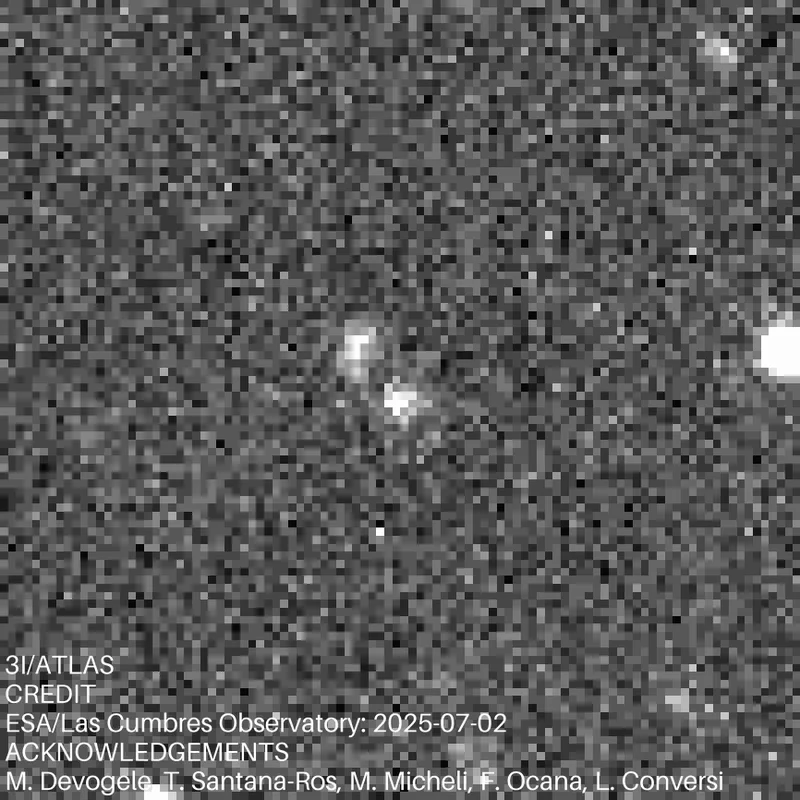
And here’s where it gets really interesting. The fact that this comet was zipping through our solar system at 137,000 miles per hour—it's unheard of. That speed, combined with its trajectory, screamed "interstellar visitor." It's only the third confirmed interstellar object we've ever detected, following 1I/‘Oumuamua and Comet 2I/Borisov. Each one is unique, each one challenges our assumptions, and each one forces us to ask bigger questions about the universe. NASA’s New Images Reveal Best Look Yet at Interstellar Comet 3I/ATLAS
But it's not just about the science; it's about the human spirit of exploration. Karen Meech, a planetary astronomer at the University of Hawaii, said it best: "Each one of these has been special and precious, and everybody drops everything to look at them." This is the kind of breakthrough that reminds me why I got into this field in the first place.
Now, I know what some of you might be thinking: "Okay, Dr. Thorne, cool comet. But what does it mean for us?" Well, imagine a world where we can routinely intercept and study interstellar objects. Imagine the insights we could glean about the formation of other star systems, the potential for life beyond Earth, and the very origins of the universe. This is the first step towards that future.
And while the scientific community is buzzing with excitement, I can’t help but think about the ethical implications. With this new knowledge comes responsibility. How do we ensure that our pursuit of knowledge doesn't inadvertently disrupt other potential ecosystems? How do we balance the desire to explore with the need to protect? These are questions we must grapple with as we venture further into the cosmos.
The James Webb Space Telescope is slated to make additional observations in December, likely the last chance we'll have to see 3I/ATLAS as it exits our solar system. But the data we've already collected will keep scientists busy for years to come. NASA releases new photos of interstellar comet 3I/ATLAS
A New Chapter in the Cosmic Story
This isn't just about a comet; it's about rewriting our understanding of the universe, one interstellar visitor at a time. And I, for one, am incredibly excited to see what the future holds.