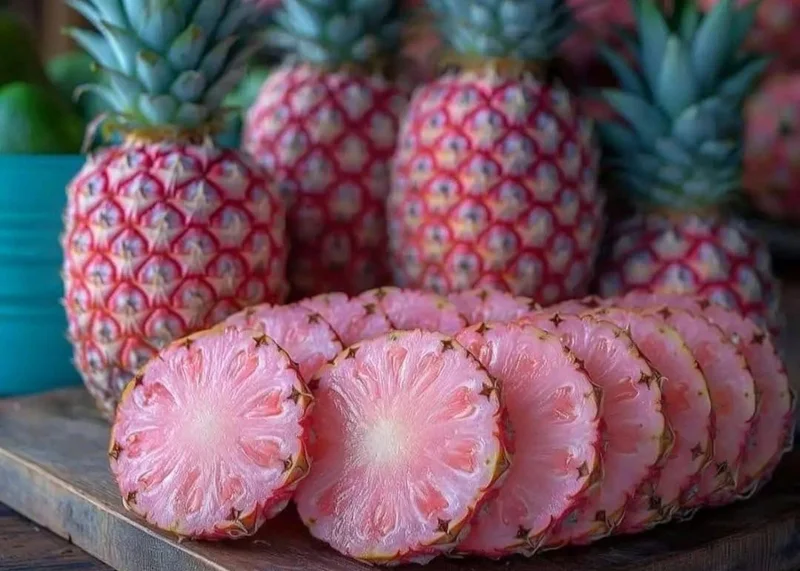
Pink Pineapples: A Sweet Peek at Our Designer Food Future
The Pink Pineapple: More Than Just a Pretty Fruit, It's a Glimpse into Our Genetically Modified Future Okay, folks, let's talk about pineapples. But not just any pineapple—the *pink* pineapple. I know, I know, it sounds like something out of a Willy Wonka movie, but it's real, it's here, and it's got me thinking about something much bigger than just a trendy fruit. We're talking about the dawn of designer produce, where science and nature are collaborating to create foods that are not only delicious but also optimized for our health and enjoyment. The pink pineapple, as you might have guessed, is a genetically modified version of the regular pineapple. But before you start picturing Frankenstein's fruit, let's clarify: it's not about injecting some foreign, scary substance into the pineapple. It's about tweaking what's already there. See, regular pineapples convert lycopene (the stuff that makes tomatoes red) into beta-carotene, which gives them that yellow color. The pink pineapple? Scientists just turned off the enzyme that does that conversion, allowing the lycopene to shine through, resulting in a gorgeous pink hue and a slightly sweeter taste. Benny Blanco seems to agree, calling the taste "incredible". Think of it like this: it's like adjusting the settings on a camera to bring out a particular color. It's not artificial; it's enhancement. And the implications of this are huge. This isn’t just about aesthetics, though. The pink pineapple is packed with lycopene, which is a powerful antioxidant linked to reducing the risk of cancer and heart disease. It's also rich in Vitamin C and bromelain, an enzyme that aids digestion. So, you're not just eating something that looks good on Instagram; you're eating something that's genuinely good for you. The pink pineapple is grown exclusively on select tropical farms under carefully controlled conditions, and it takes over two years to cultivate each one. That exclusivity, combined with the high shipping costs and elegant packaging, is why these pineapples can sell for anywhere from $25 to $50 each. Is it worth it? Well, that depends on your perspective. But I think it represents something far more valuable than just a price tag. But let's be honest, the viral appeal is undeniable. Its pastel color and photogenic charm make it a favorite among influencers, food bloggers, and anyone looking for the next Instagram-worthy snack. It’s a status symbol, a conversation starter, a piece of edible art. And in a world saturated with the mundane, that's worth something, right?Pink Pineapples: A Sweet Glimpse of the Future of Food?
The Future of Food is Here Now, some people might be skeptical. Genetically modified? Isn't that dangerous? Well, the pink pineapple is approved for consumption, and the changes only involve preserving natural lycopene. No harmful substances are added, and none of the fruit's natural nutrition is lost. But I understand the hesitation. We need to have open and honest conversations about the ethical implications of genetic modification. We need to ensure that these technologies are used responsibly and sustainably. However, I can't help but feel excited about the possibilities. Imagine a future where we can tailor our food to our individual needs. Imagine pineapples that are even richer in antioxidants, or bananas that are fortified with essential vitamins. Imagine crops that are resistant to drought and disease, ensuring food security for everyone. This is the kind of breakthrough that reminds me why I got into this field in the first place. It's about using science to make the world a better place. It's about pushing the boundaries of what's possible and creating a future where everyone has access to healthy, delicious, and sustainable food. I saw someone on Reddit say, "I'm not sure how I feel about GMOs in general, but this pink pineapple looks delicious!" And that, to me, is the key. It's about creating foods that are so appealing, so beneficial, that even the skeptics can't resist. Imagine walking into a grocery store and seeing a rainbow of fruits and vegetables, each one optimized for your health and enjoyment. That's the future that the pink pineapple is hinting at, and it's a future that I can't wait to see. What if you could walk into a grocery store and pick out a pineapple that was specifically designed to boost your immune system or improve your skin health? It sounds like science fiction, but it's closer than you think. A Taste of Tomorrow The pink pineapple is not just a fleeting trend; it's a symbol of a larger shift in our relationship with food. It's a reminder that science and nature can work together to create a better future. It's a glimpse into a world where our food is not only delicious but also personalized, sustainable, and optimized for our well-being. The age of designer produce is upon us, and the pink pineapple is just the beginning.